
If there is one thing I remember about my own childhood, it is this: there is magic in tiny things. Real life objects shrunk down to unrealistically miniature sizes are a call to all children everywhere (and every age) to imagine. Hand a child a tiny boat made from a walnut shell and suddenly they are transported to another world.

Small world play is an important piece of the Reggio approach, because it fosters creativity, imagination, and language development. In fact, most of preschool play involves tiny people, small cars, block cities, etc. for exactly these reasons. Play within miniature imagined environments is a natural part of early childhood and helps kids make sense of the real bigger world in which they live. But what about older kids?
As children grow older, they don’t necessarily lose their desire for miniature play. It just evolves. Think about legos, for example. My boys had an affinity for legos and “mini figs” well into their teenage years. We literally have boxes of them in the closet that we can’t bear to get rid of. My husband (a big kid at heart) still has quite the collection of Hot Wheels cars. Even I have a miniature bulldog on my kitchen windowsill that reminds me of my beloved bulldog, Daisy. No matter what age you are, small things are enchanting.
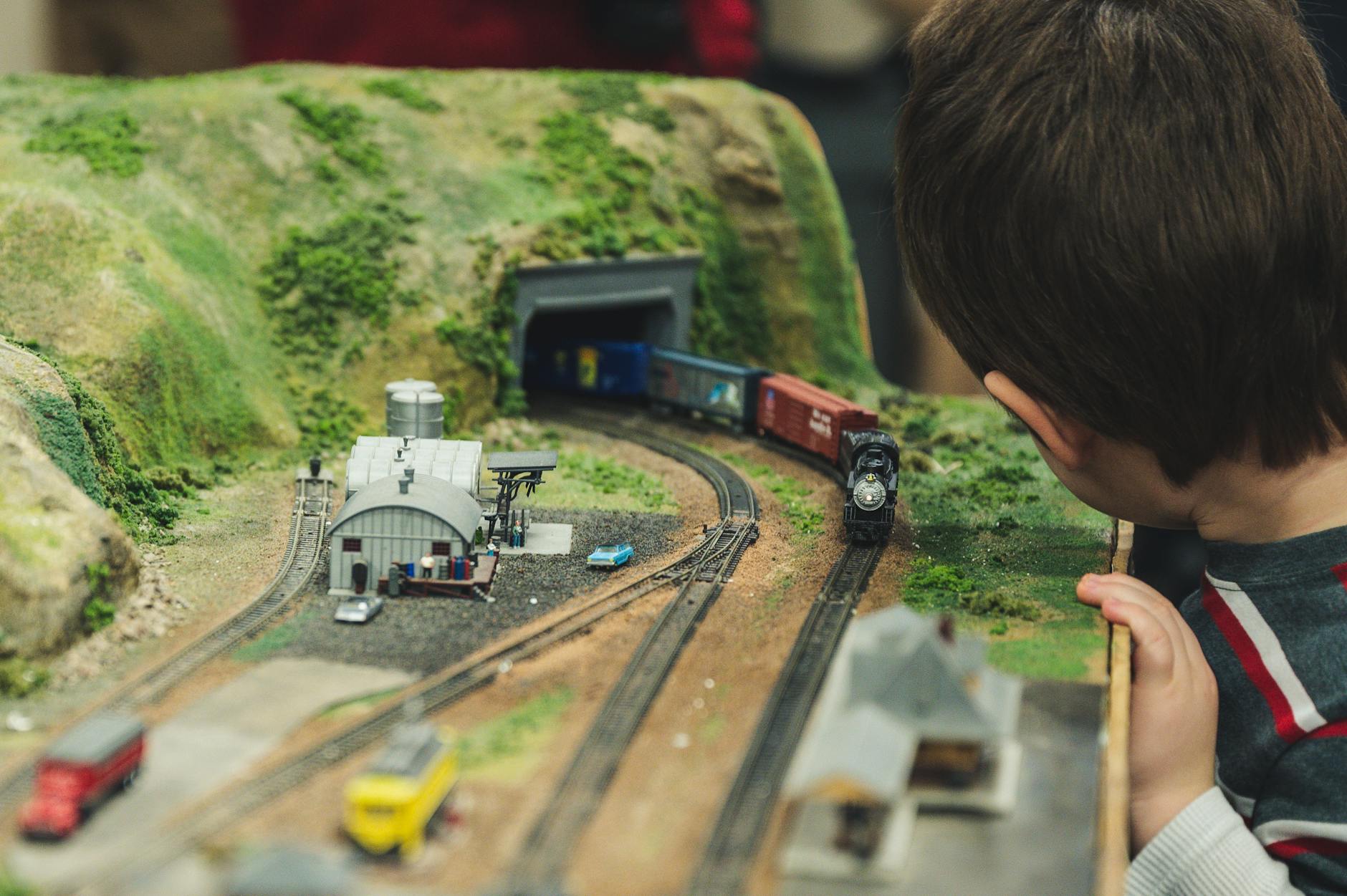
So how do we utilize this magic in the classroom and use it to foster learning? I don’t have all the answers to this, as I’ve struggled myself with this question and how to incorporate small world play into my K-2nd classroom. But I recently stumbled across a blog post about Story Sacks, and a lightbulb went off. Eureka! What if we paired books and stories that we read in the classroom with small things that can be used to reenact the story?
It is human nature to tell stories. We have literally been doing it since the beginning of time. Our brains are wired to respond to stories, and retelling stories is a powerful literacy strategy. Retelling requires students to determine key details, recall events in order, understand text structure, and even make inferences. It also develops and solidifies their vocabulary.
In light of this, I have decided to conduct an experiment.
This week as we learn about weather and the water cycle, we will be reading a delightful and incredibly beautiful story by Grahame Baker-Smith called The Rhythm of the Rain.
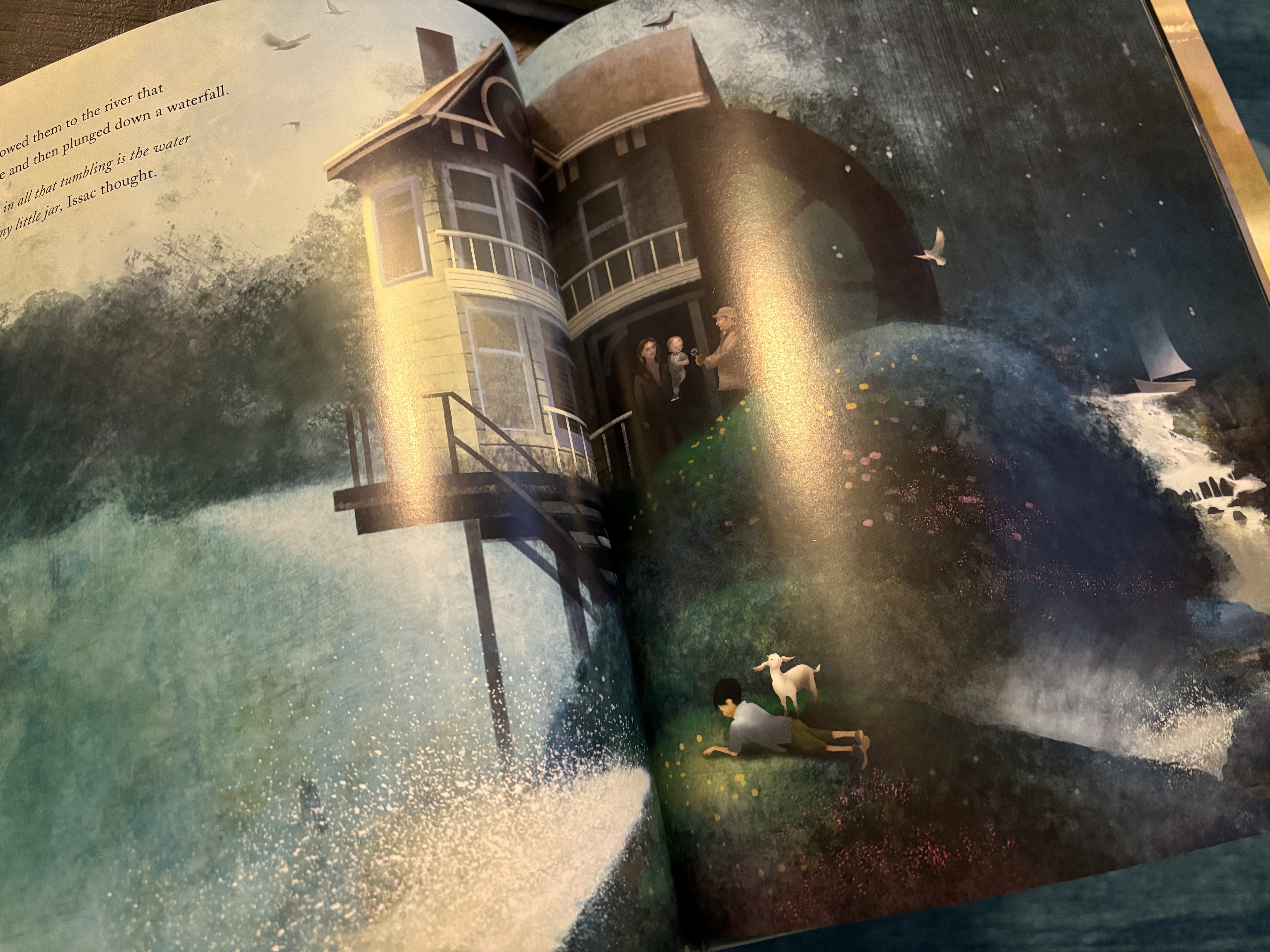
It follows the journey of a tiny jar of water across the world, through the ocean, past villages and cities, through rain drops and waterfalls, and finally back to the small pool where a little boy plays. To add to this enchanting book and to encourage retelling, I’ve collected and painted a few simple props that make an appearance in the story.
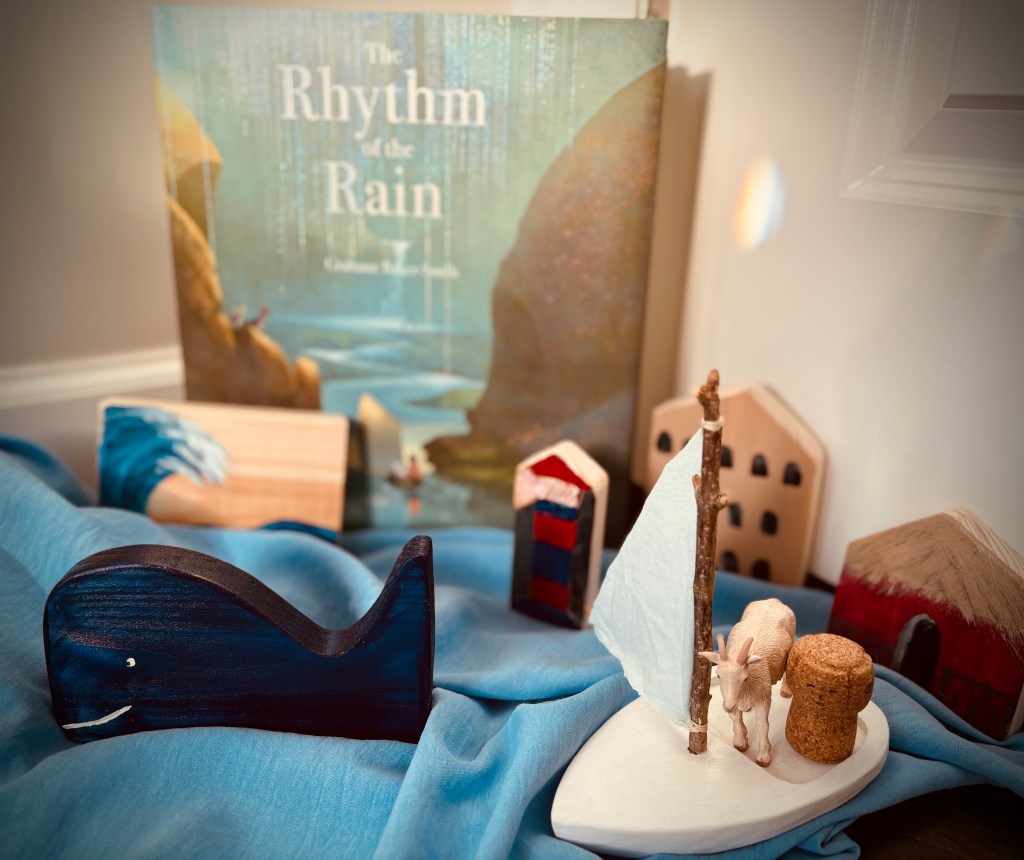
And by simple, I really do mean simple. These are literally blocks of wood that my handy husband cut into rectangles and rudimentary house shapes. A wine cork stands in as Isaac, the main character, and a little plastic goat (which is comically much larger than my little cork boy) will be his pet companion on the journey.
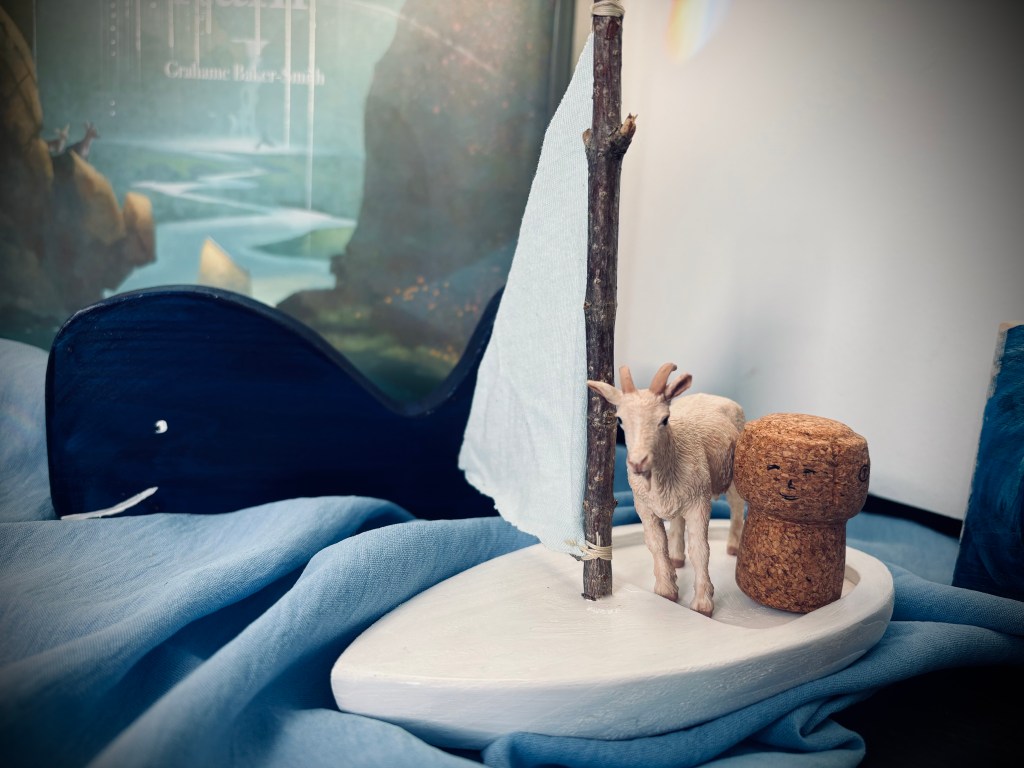
My buildings are smaller than my boat and my boat is almost as big as the whale, but it doesn’t matter. In fact, the simpler and less realistic you can make it, the better. The idea is to encourage imagining. And reality and correct proportionality doesn’t really lend itself to imagining, now does it? So, if you are toying with the idea of incorporating small world play into your classroom or home, don’t be afraid to make your small world a little wonky.
And don’t think that you need to spend a lot of money either. Gather what you have. Find some loose parts, or pieces of nature like sticks and rocks to add to your scene. I even used an old silky blue shirt that I no longer wear as the water for my ocean. Small world props can be anything you have on hand, because children have a crazy talent for turning trash into treasures and seeing the extraordinary in everyday things.
Go ahead, be brave and childlike, and don’t worry about messing it up. You won’t. You can’t really. Happy imagining, and I hope you find as much magic in the miniature as your kids most certainly will!
 Teach With Joy and Wonder
Leave a comment