

As a mom and a teacher, this has to be the most frequently asked question over the course of any day. This and, “Can I have a snack?”, of course. And, in truth, these two questions aren’t entirely unrelated. Food fills the belly, but a good read-aloud is a tasty snack for the mind and fuel for the imagination. And good books and good foods are also two things that you are never too young or too old to truly appreciate and crave.
Books are also the one thing that will capture the attention of virtually every child. If you ever find yourself in the midst of a chaotic passel of rambunctious tiny humans, and you’ve exhausted all other options of sanity, pull out a book and start reading. Then watch them come.
It will start slowly, but one by one they will come.
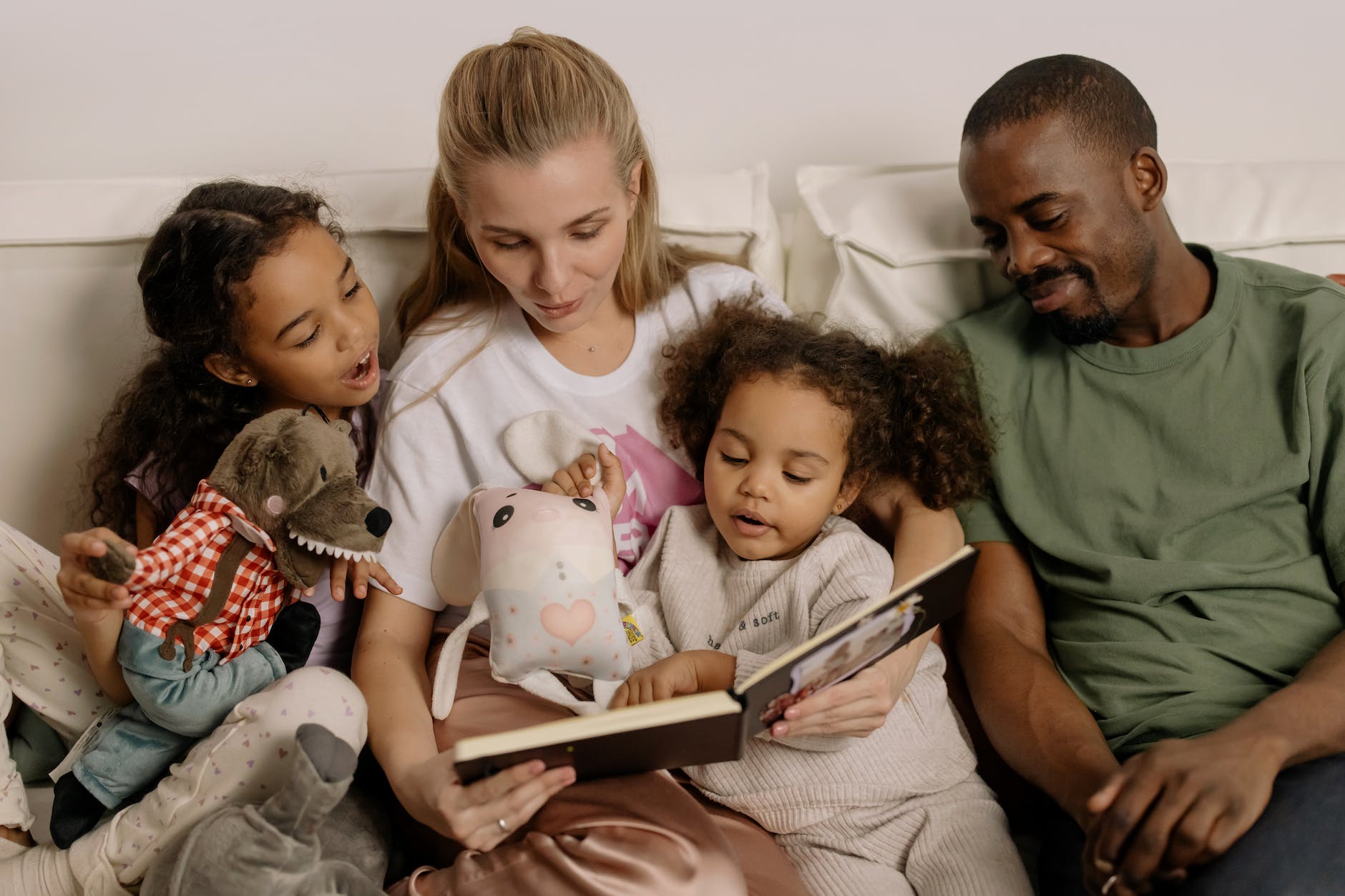
They will curl up beside you, plop down in your lap, hang over your shoulders, perch by your feet. They will complain they can’t see, even though there may not be any pictures to look at except the ones they create in their own minds. And then they will begin to shush the others because they can’t hear.
There is something magical about a story read out loud. It begs to be listened to, talked about, questioned, and even acted out to carry the story on in our own ways. You will even find your older ones leaning in. You know those wise ones who are “past the point of needing to be read to” because they are fully capable of reading to themselves? That alone is proof of some powerful magic.
But being read to is also a crucial component in raising up creative and successful students. Dr. John S. Hutton, a clinical research fellow at Cincinnati Children’s Hospital Medical Center points out that being read to necessitates the need for the imagination to recreate what is happening in the story. And, therefore, children who are read to become better readers themselves later on because they have developed the part of the brain that allows them to visualize what is going on in the story.
Aside from strengthening the imagination, reading aloud increases language development. As psychologist Jessica Montag points out, books contain “a more diverse set of words than child-directed speech”. Reading to children exposes them to more sophisticated vocabulary than they would otherwise encounter in everyday conversations with adults.
But the best part of reading out loud is the pure pleasure and joy of it. There is truly nothing better than curling up on the couch together and sharing an unforgettable story. These will be the moments that you remember and cherish long after your babies are grown.

Tips for a successful story time:
- Choose a book that you personally enjoy. Pick one of your favorites from your own childhood, and share this with your kids. They will want to experience it with you and discover why you love it enough to share it with them.
- Read to them before bed. You know that time of the day when they will do pretty much anything to postpone sleep? If they don’t seem to be open to reading during the day, try it as part of the bedtime routine.
- Do the voices. Even though it seems silly, and you are much too dignified for this. Do the voices. They will love it, and I suspect you will as well.
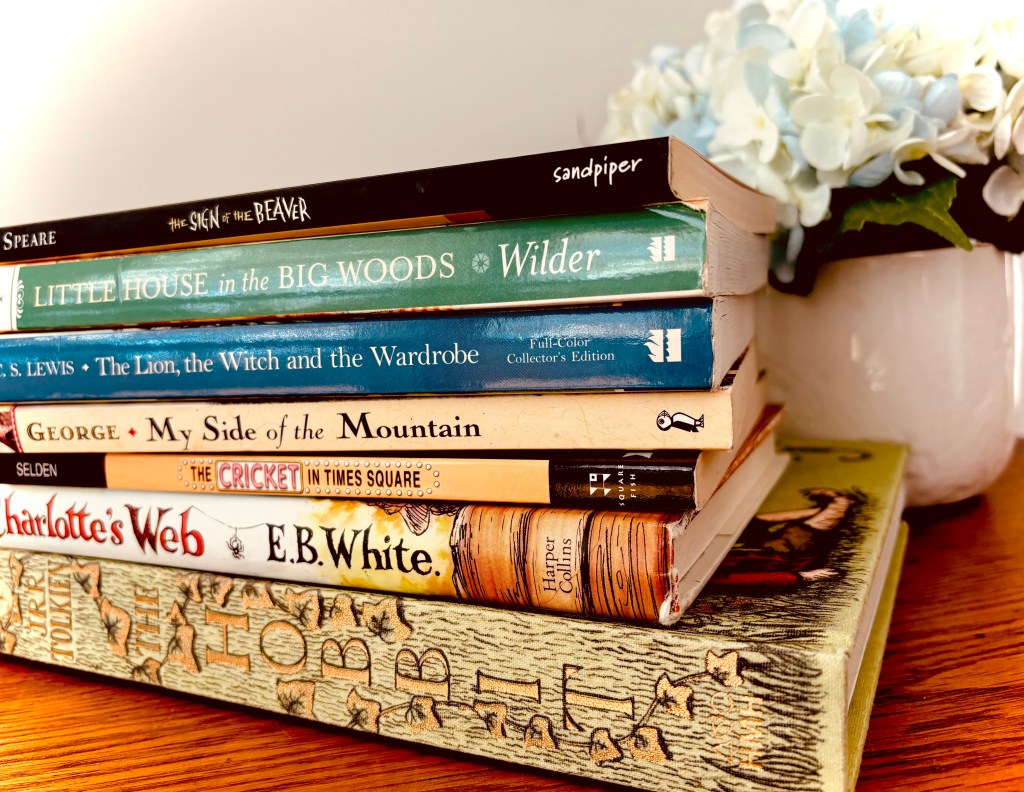
Check out my bookshelf for book recommendations if you are drawing a blank on where to start or would love to discover some new titles. Then gather your little ones and take a journey together that you will forever cherish and never forget.
References:
M.D, P. K. (2015, August 17). Bedtime Stories for Young Brains. Well. https://archive.nytimes.com/well.blogs.nytimes.com/2015/08/17/bedtime-stories-for-young-brains/
Melbourne, M. C. P. & S. P. S., Port. (2016, September 13). The Many Benefits of Reading Aloud to Your Kids. https://melbournechildpsychology.com.au/blog/the-many-benefits-of-reading-aloud-to-your-kids/
 Teach With Joy and Wonder
Leave a comment